#NationalShortStoryMonth Spotlight: excerpt from “The Ugliest Girls”by Lindsay Wong
Excerpt from “The Ugliest Girls” by Lindsay Wong, from Tell Me Pleasant Things About Immortality, published by Penguin Random House, 2025.
—
In my village of Beiji, in the coldest, whitest corner of Heilongjiang Province, my harelip has always been fierce and unapologetic, my eyes like misshapen mouse turds. My long, uneven braids dangle like parasites; my mouth pinched like a rotted lotus flower. I have been crowned with the dried leaves of red Manchurian ash trees twice— the dishonour of being one of my village’s ugliest girls. My mother and her midwife screamed in astonishment after she birthed me, and my father attempted to snap my newborn neck in the blue Daxing’anling woods.
Afflicted with pity or guilt, he changed his mind. “Why didn’t you just eat me when I was born?” I asked my mother, who was rolling dumpling dough on our rickety kitchen table.
“The Tsungs ate their ugly newborn last week.” “Your father and I were not starving then,” she said, wiping flour off her grey chang’ao.
“The Yangs are rich and they ate three girls before one was acceptable looking,” I insisted.
“Well,” my mother said, “I guess your father and I lost our appetites when you were born. That’s why we eat our meals separately and you eat alone in the barn.”
As one of the ugliest, most misshapen girls in my village, I had been told that I had no future. The brothels did not want me, and even blind men shuddered at the thought of my deformities. It was commonly known that the ugliest girls of the north were worse than average snaggle- toothed girls with bad skin. That ugliness could be passed around like venereal diseases. You should not sleep with an ugly girl, but you may eat her was the saying in all our villages. Being ugly was our curse, and perhaps being cooked in a stew when the chickens and pigs and sheep had been eaten was an ugly girl’s fate. It all depended on the state of the winter harvests and our families’ unpredictable appetite for kindness.
After a long, harsh winter which turned our lips blue, the ugly girls and I were preparing to be eaten when government representatives arrived swiftly on strong white horses, clutching imperial red scrolls from the Emperor Tongzhi himself. An esteemed- looking man, as thin and elite as a calligraphy brush, bowed as he entered the courtyard of our siheyuan. He wore a changpao of blood- orange silk. “Is this the residence of an ugly girl?” he demanded. My parents, sensing opportunity, bowed quickly and ushered the Emperor’s representative inside our threadbare ancestral home.
As my mother poured oily green tea for us, the Representative recited in an official- sounding voice: “There are respectable bachelors across the ocean, in a faraway place called Gold Mountain. Perhaps you’ve heard stories of such a dwelling in the West, paved with riches? Our benevolent Emperor has sent China’s finest sons to acquire this gold and build a vast colony. What our wealthy bachelors require now are proper wives. You will be paid handsomely if you sell your ugly daughter across the sea in service of China.”
Trying not to look too eager, my mother offered him a generous slice of day- old mung- bean cake, while my father nudged me to hide my monstrous face in case my presence offended the Representative. But he did not seem disgusted because he asked my father if he could have a closer look at me.
At the Representative’s request, I showed him my coarse hands and yellow donkey teeth. He nodded his approval at my flea- eaten skin, even though he was careful not to get too close. My parents clutched each other like prized meat.
The Representative looked pleased. “You are doing China a wonderful and patriotic duty,” he said to me, smiling with a blank, superior benevolence. “You will be going to a land full of ghosts— gwei— but you will repopulate for the sake of our beloved Emperor, won’t you?”
I was stunned. I had never imagined anything for myself. I nodded with what I hoped was acceptable politeness. I felt numb and tongue- tied in his presence. Would I have a future in this land full of frightening ghosts? Would I still be the ugliest thing?
The Representative sipped our proffered tea and bit into our stale cake. My stomach lurched, hopeful. I wondered if it was possible that a stranger with money and genteel manners might actually want me.
My beaming father signed the offered scroll, marking an eager but determined X where his name should be, and in return, received three months’ wages. It was a large enough sum, able to feed my mother and him on a steady diet of eggs, poultry, and sour vegetables. The Representative chatted easily with my father while my mother helped me pack my only two ruqun in a burlap sack. She wrapped a homespun veil over my head to hide my hideousness.
“Keep your face covered when you meet your new husband,” she said, not bothering to pretend that she was sad. My father tried his best to look regretful. He clutched the satchel of coins to his chest, as if praying.
“Farewell, Chicken- Face,” my mother called as I accompanied the Representative outside. “May your daughters be more fortunate- looking than you.”
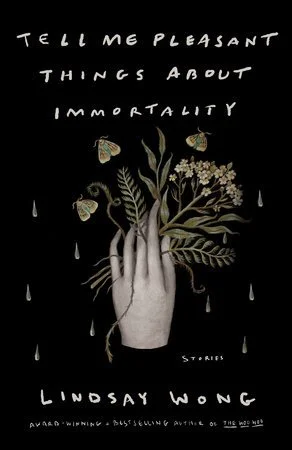
Living forever isn’t everything it’s cracked up to be. Hearts can still break, looks can still fade, and money still matters, even in eternity. The ghosts, zombies, and demons in this collection are all shockingly human, and they’re ready to spill their guts. Vanity, love, and tragedy are all candidly explored as the unfulfilled desires of the dead are echoed in the lives of modern-day immigrants. Story-by-story, the line between ghost and human, life and death, becomes increasingly blurred.
There’s a courtesan from 17th century China who, try as she might, just can’t manage to die. Grandmama Wu, who returns from the dead to protect her grandchildren from bullies. Not to mention an Internet-order bride who inadvertently brings the apocalypse to Nebraska City.
From Shanghai to Vancouver, the women in this collection haunt and are haunted—by first loves, troublesome family members, and traumatic memories. Intertwining horror, the supernatural, and mythology, Tell Me Pleasant Things about Immortality riotously critiques contemporary life and fearlessly illuminates the ways in which the past can devour us. A collection about transformation and what makes us human, it solidifies Lindsay Wong as one of the most vital and electrifying voices in Canadian literature today.
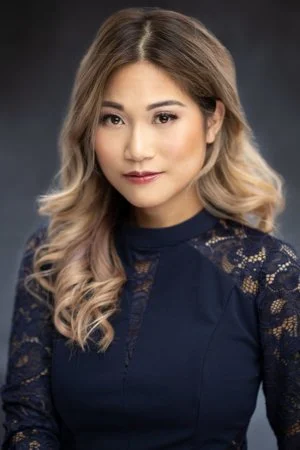
LINDSAY WONG is the author of the critically acclaimed, award-winning, and bestselling memoir The Woo-Woo, which was a finalist for Canada Reads 2019. She has written a YA novel entitled My Summer of Love and Misfortune. Wong holds a BFA in creative writing from the University of British Columbia and an MFA in literary nonfiction from Columbia University. She currently teaches creative writing at the University of Winnipeg. Follow her on Twitter @LindsayMWong, Instagram @Lindsaywong.M, or visit www.lindsaywongwriter.com.
Photo credit: Shimon Karmel