#NationalShortStoryMonth Spotlight: excerpt of “My Mother’s Hands Are Silver” by Chanel Sutherland
Excerpt from “My Mother’s Hands Are Silver” from Layaway Child by Chanel Sutherland, published by House of Anansi Press, 2026.
Reprinted with permission.
—
My mother’s hands are silver. They seem to shine, the streaks on her brown knuckles so startling. Almost alien.
I remember the first time I laid eyes on them, my first morning waking up in Canada. They glowed like the sea under a half-moon.
Pretty, right? You ever seen skin hold light like that? That’s how her hands looked to me—palm planted on her hip as she surveyed a clean room, knuckles brushing the edge of a table before she placed a dish down.
I couldn’t stop looking.
I didn’t yet know the story of her hands. Didn’t understand that the silver came from a deep-down place she tried to keep hidden from me. Her hands were a map. A map of the fifteen-hour days. Of the scrubbing and bending and lifting. A map of the rooms she cleaned where no one said thank you.
Of the labour that emptied her and fed me at the same time. Those were the hands of exhaustion.
But you wouldn’t have known it, not in those early days after I arrived. Tired as Mom was, every Sunday, you’d find us strolling through the galleries of the Musée des Beaux-Arts. Maybe she thought if I learned to love art, to understand it the way the people in those grand houses she cleaned did, I’d find a way into something softer, something easier than what her hands had known.
Her favourite paintings were never of people. Always landscapes. Not the portraits with women who had hands like hers; worn and lined, holding children, resting on the edges of wooden chairs. The hands in Käthe Kollwitz’s Mother with Child in Her Arms, in Jean-François Millet’s The Gleaners. The rough-hewn faces of Van Gogh’s The Potato Eaters. Mom never stopped at those. She stood instead before lakes, trees, big white skies.
She had a way of standing in front of those paintings, still as water in a basin, as though the quiet inside the frames stretched all the way back to wherever she had left herself behind. I knew better than to ask her why one painting spoke to her more than another. My mother didn’t explain those things.
Still, every Sunday, we would walk galleries together, her silver hands resting lightly in front of her, her back straight. She moved through each room like she belonged, studied the paintings not just with her eyes but with her whole body, as if she could sense the artists’ thoughts in every brushstroke.
Beside her, I followed where her eyes led, trying to see the way she saw. As though learning to see through her gaze might help me understand her.
Afterward, we always got ice cream from a narrow shop between a bookstore and a tailor. Mom’s eyes would sparkle with a joy so rare it felt borrowed.
“That one with the trees,” she’d say to me, spoon tapping the rim of her cup. “That was A. Y. Jackson. He from Montreal.”
Or with a kind of brightness in her voice, “I could do that too, you know. Paint like that.”
Once I asked, “Why don’t you paint then?” She glanced at me, then back down at her melting scoop. Shaking her head, she said, “What time do I have to be painting? I work, Shelly.” Her voice held no bitterness, just fact. Like saying the sun rose or water boiled.
Then, softer, almost to herself, she added, “Still, I could do it.”
And I believed her.
***
It was my mother who taught me to love reading. Not the way I had known it back home, where books stayed locked inside classrooms, and reading came with rulers and recitations.
We had stories in St. Vincent, plenty, but they weren’t pressed between pages. They lived in church, in the preacher’s warnings, in the comess passed around like Eucharist bread: who did what, who went where, who was no good.
But in Canada, Mom gave me something different. A library card. A whole world of books that belonged to no one and everyone all at once.
“Any book you want, Shelly,” she said. “You walk in there same way like anybody else.”
It didn’t sound real to me, this kind of freedom. It felt like one of those things that seemed free but cost you later. The kind of test this country gave when you first arrived.
What is the purpose of your visit?
How long are you staying?
Questions that pretended to be simple but carried weight you only understood once you’d been here a while.
The first time we went to the Bibliothèque et Archives nationales du Québec, we took the metro, got off at Berri UQAM. Mom held my hand the whole way. I could feel her anticipation in the rhythm of her steps, in the way she kept smoothing her shirt. Like this place—this library, full of books with no locks on them—meant more to her than she’d ever let on.
The air smelled different in this part of Montreal—concrete and exhaust, cold metal and the sharp scent of hurry. Everywhere I looked was another sign of busyness: sweat pressed into two-piece suits, brakes catching at the edge of a red light. The harsh yell of a bus driver leaning out the window, already late.
It wasn’t like our neighbourhood, where the streets moved slower, where corner stores smelled like patty and old mop water, where the sidewalks still held bits of yesterday.
This was louder, taller. Like a city with teeth. It overwhelmed me, even as it churned something loose inside me.
At the library doors, Mom squeezed my hand once, then let go. I felt small facing the towering glass of the entrance. Going inside, it was like stepping onto another planet. Ceiling like sky. Light falling in patches as though torn. And the books—shelves upon shelves stacked farther than I could crane my neck to see.
I was in awe, but a part of me still waited. Waited for the sign on the wall that didn’t want me. For the hush that falls when you enter where you’re not welcome.
You ever feel that? That being watched to see if you’ll touch what you shouldn’t.
When no such sign came, I stepped forward. Not fast. Not bold. Just forward.
At the sign-in desk, I watched as Mom filled out the forms for our library cards in her careful handwriting, her silver hands writing our names across the page like a blessing.
We walked the aisles together in a familiar pattern—me wandering a little, Mom always just behind. She didn’t rush me. She let me explore, let my fingers skim the shelves the way she let me linger in front of the canvases at the museum.
I’d glance back and see her pause too, her hand resting lightly on a spine in the classics section. She didn’t pull the book down right away. She tilted her head slightly, traced the edge of the cover with her thumb. When she did open it, Mom read like she was reading brushstrokes. Slowly. As if the words had been painted there for her to find.
When I chose my first book, I ran my hands over its cover the way I had seen her do, like it might speak. The title glowed under the lights: I Know Why the Caged Bird Sings. I read the back cover, then the first page. Something in it felt familiar, as though the book had been waiting for me.
At the checkout desk, the librarian scanning the book paused. She looked at the cover, then said to Mom, “She’s a bit young for this, isn’t she?”
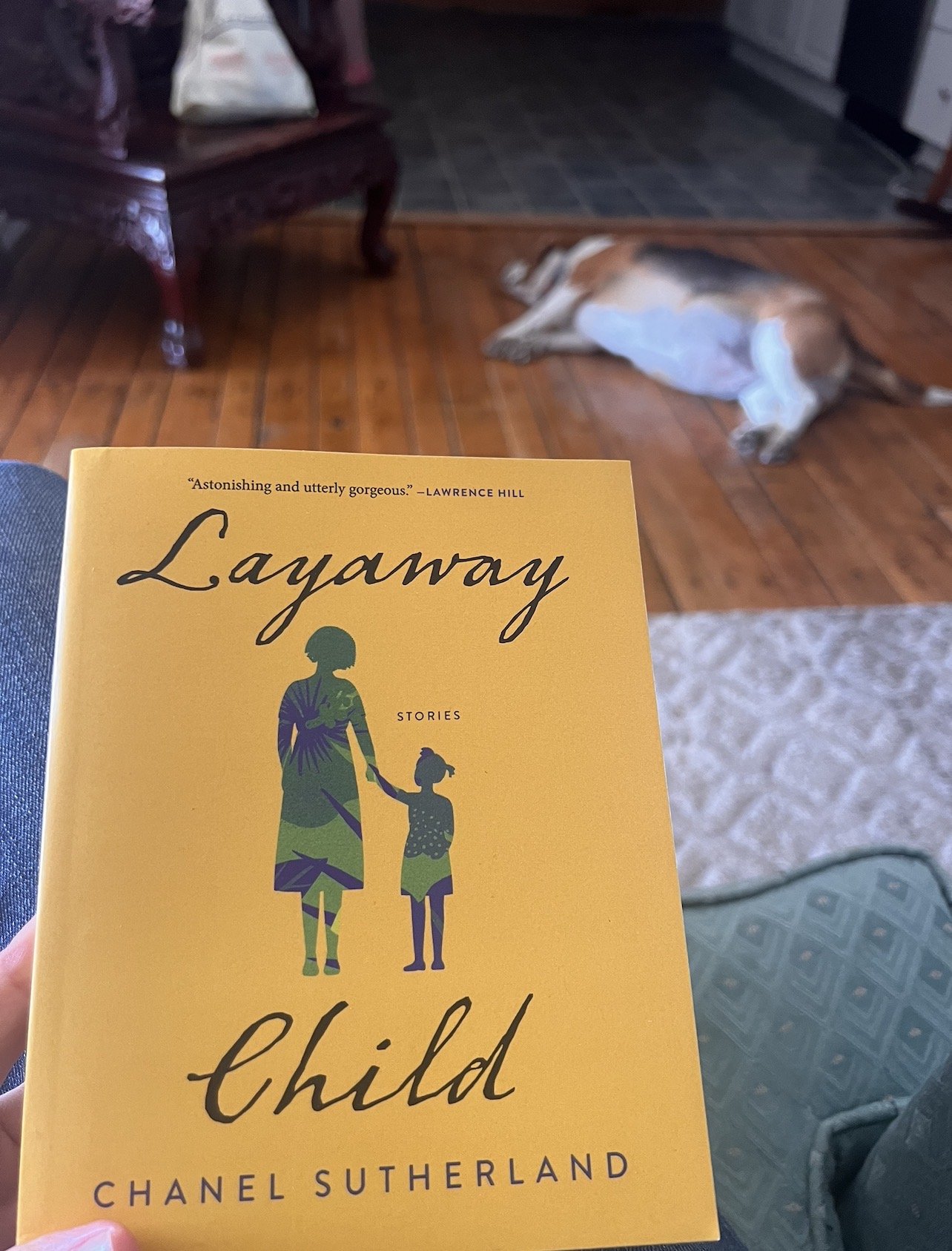
Magnificent stories about Caribbean immigrants navigating the emotional terrain of girlhood, displacement, longing, and identity across continents.
Layaway Child is a luminous debut short story collection by award-winning writer Chanel Sutherland that explores the emotional landscapes of Caribbean families fractured by migration, especially the harrowing yet resilient journeys of Black girls and women. In lyrical, linked stories, Sutherland traces the lives of mothers working abroad as housekeepers and nannies, and the children they left behind.
From lush island childhoods marked by absence and community, to the cold, alienating spaces of Canadian cities, Layaway Child captures the complexity of growing up between worlds. A mother, newly arrived in Montreal, is kept from speaking to her daughters by her own mother’s misguided attempt to help her let go of home. A schoolgirl becomes a spectacle under the gaze of white classmates. A young girl’s curiosity about the cosmos collides with the confusion of puberty. Sutherland brings deep compassion and sharp insight to each moment, revealing both the beauty of island life and the harshness of immigration’s toll.
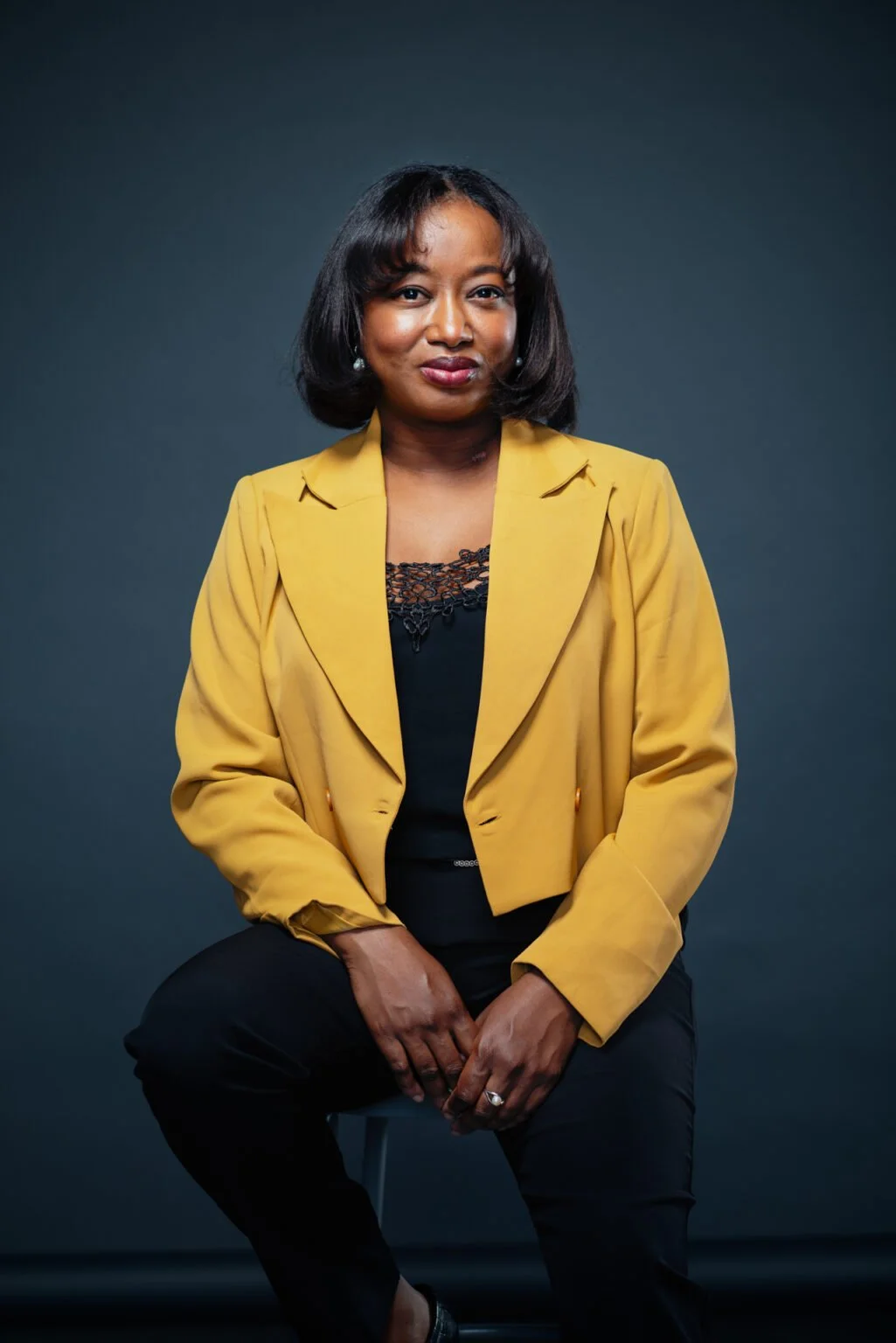
CHANEL SUTHERLAND is a Vincentian Canadian writer of fiction and creative nonfiction. She won the 2025 Commonwealth Short Story Prize, which she was also longlisted for in 2022. Chanel is also the winner of the 2021 CBC Nonfiction Prize and the 2022 CBC Short Story Prize and was named one of CBC Books 30 Writers to Watch in 2022. Chanel lives in Montreal.